Lynchian
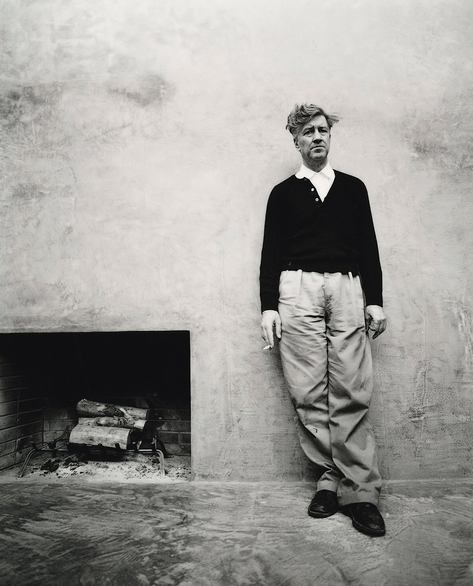
David Lynch in 2001. Photo: Kiino Villand / Trunk Archive
A year has now passed since film director David Lynch died aged 78. Over the five decades that he worked, his style and influence was such that it gave rise to the adjective “Lynchian”. With the likes of Eraserhead, Blue Velvet, Lost Highway and Mulholland Drive to measure against, no other director could possibly come close to creating a Lynchian film.
Lynchian is the title of John Higgs’ short book published last November. This is not a biography - and much the better for not being so. Instead, a series of short and highly readable essays in which Higgs tries to get the crux of the genius of the late, great film director, and in turn the meaning of “Lynchian”.
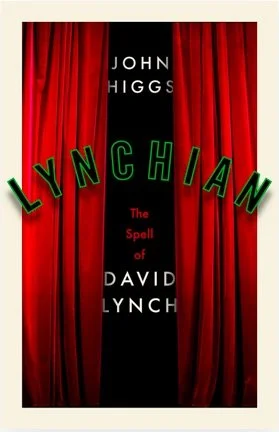
Lynchian, John Higgs, Weidenfeld and Nicolson, 2025
Lynch is perhaps most readily associated with TV series Twin Peaks (1990-1991 and 2017) which he co-created with Mark Frost. In the UK that first series of Twin Peaks aired on BBC2 at 9pm on 23 October 1990, six months after it had been shown in North America. This was at a time when most households had a mere four TV channels and there was no social media to prepare viewers for what was about to happen. The previous week the same slot had seen John Cole look “at the history of food and cooking in the 20th century, focusing on the changes in British dining habits.” Finding Laura Palmer, wrapped in plastic, washed up on a riverbank blew our minds.
John Higgs:
Mainstream television audiences in 1990 were not used to seeing expensive glossy programming that deviated from the average. It changed the television landscape and laid down a path to the era of high-quality television that followed. Twin Peaks was so confident in its identity, so complete in itself and so perfectly realised, that it could march off into unchartered territory in a way that was otherwise unthinkable in the risk-averse corporate network world. The audacity of it was startling.
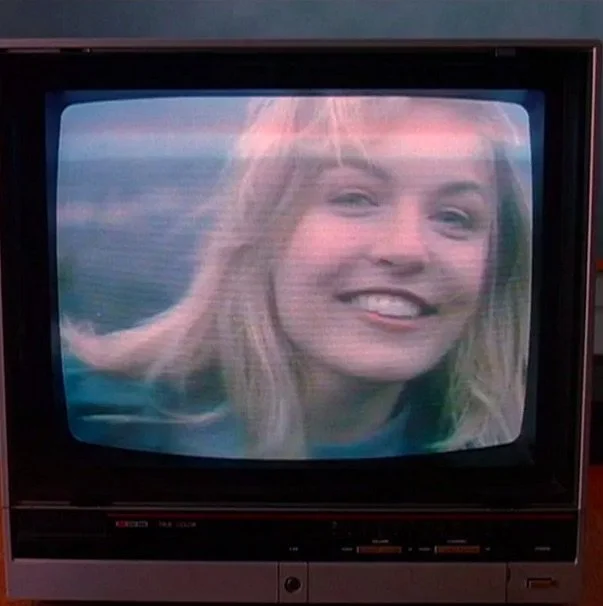
Sheryl Lee as Laura Palmer, Twin Peaks, 1990-1991
Writing in 2024 for the London Review of Books, James Meek touches on the same subject:
No cabler or streamer has made a TV series more powerful, mysterious and disturbing, more strange, than David Lynch’s Twin Peaks – a network show, its original run broadcast on ABC, ads and all. [David] Chase [creator of The Sopranos], who idolised Fellini, and despised the output of the networks he worked at for so long, loved Twin Peaks. It was … the first TV show that made him see the medium’s potential. ‘There’s a whole other level of stuff going on, this sense of the poetic that you see in great painting, that you see in foreign films, that’s way more than the sum of its parts,’ he said.
Without Twin Peaks no Sopranos. And without the success of the HBO-produced Sopranos, no Curb Your Enthusiasm, Six Feet Under, The Wire, Deadwood, Entourage, True Blood, Boardwalk Empire, Game of Thrones, Girls, Veep, Westworld, Euphoria, Insecure, True Detective, The White Lotus and Succession.
With a few nights off for good behaviour, I’ve spend the last month and a half re-watching Jesse Armstrong’s satirical drama series Succession (2018 - 2023), one episode an evening. Vogue described it as ‘era-defining’ and, running to 39 episodes, it has certainly defined the latter half of my winter.
Watching the Shakespearean tale of Royco family headed by patriarch Logan Roy (Brian Cox) first time around I wrote this:
No surprise that the series was created - and several episodes written - by Jesse Armstrong, creator of Channel 4’s longest running comedy Peep Show, a 21st century Waiting for Godot set in Croydon. Even down to some of the camera techniques, it's got Peep Show stamped all over it. Brian Cox has been treading the boards since 1965 appearing in over 100 films but this feels almost career defining. Better even than Bob Servant (but obviously not as good as when he appeared in that episode of Minder. But the cast of Succession has strength in depth. Matthew Macfadyen, Alan Ruck (who I last saw in Ferris Bueller's Day Off), Sarah Snook and Kieran Culkin all deserve gold stars. But for me the stand out is Jeremy Strong as Kendall Roy. Somehow he manages to convey being in control and a sense of fragility at the same time, often with only the subtlest of facial movements.
On second viewing, I stand by all of that, except that Kieran Culkin’s performance, especially in the fourth series is extraordinary. His gradual zen-like realisation that it’s all over for ‘the sibs’ - Shiv, Kendall and (Culkin’s character) Roman - is nothing short of draw dropping: “It’s all fucking nothing, I’m telling you because I know - it’s fucking nothing, it’s nothing, okay?”
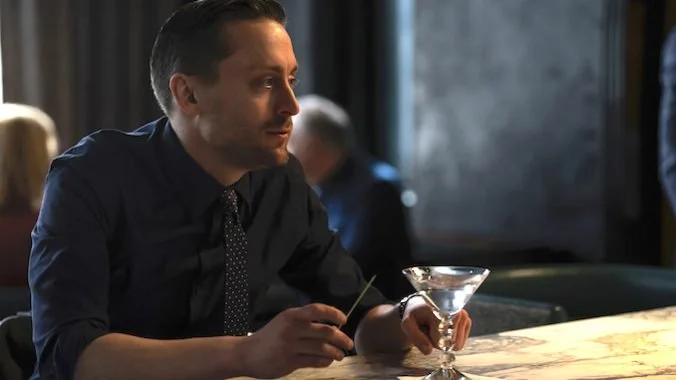
Kieran Culkin as Roman Roy, Succession, 2023
Succession is probably as far removed from Lynchian as can be imagined but I can picture David Lynch quietly nodding his head in approval at the final scene where Roman Roy walks into that wood panelled bar and, after greeting the barman with a friendly “Hey hey hey, whatup, motherfucker”, orders a Martini “with an olive the size of a severed testicle.”
As Lynch wrote in Catching the Big Fish “Stay true to yourself. Let your voice ring out, and don’t let anybody fiddle with it.”